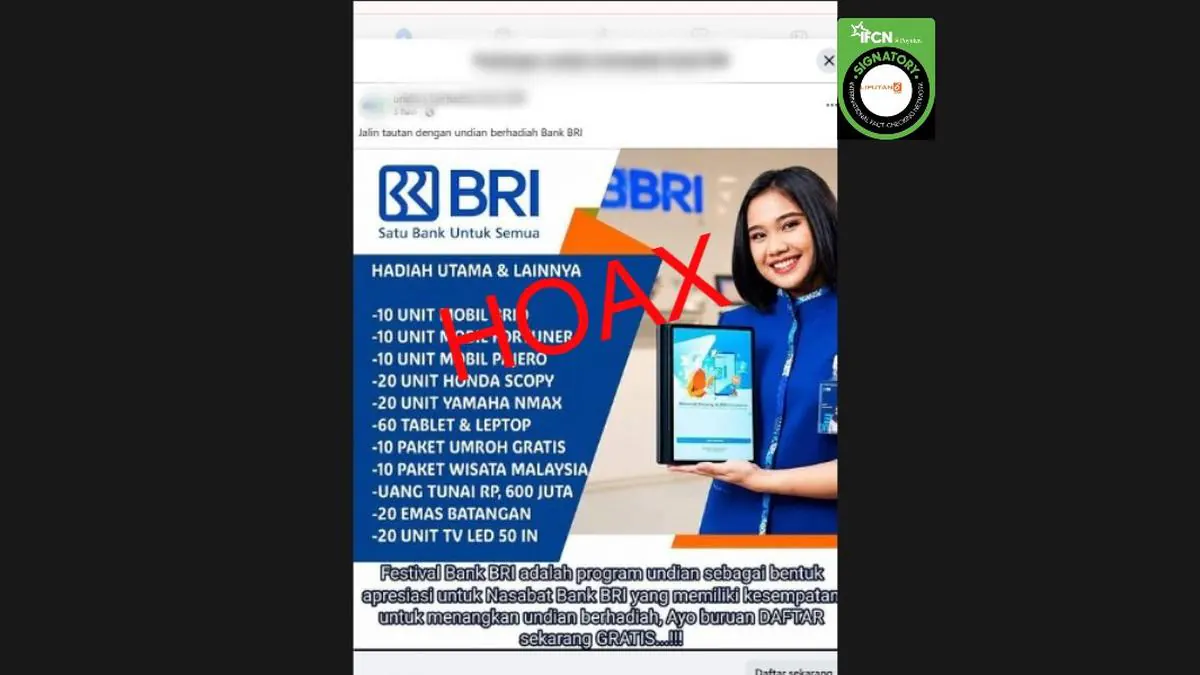
Fact Check: Link to 'BRImo Festival 2026' Prize Draw is a Hoax
Liputan6.com confirms that links circulating on Facebook for a 'BRImo Festival 2026' prize draw are hoaxes designed to steal personal data.
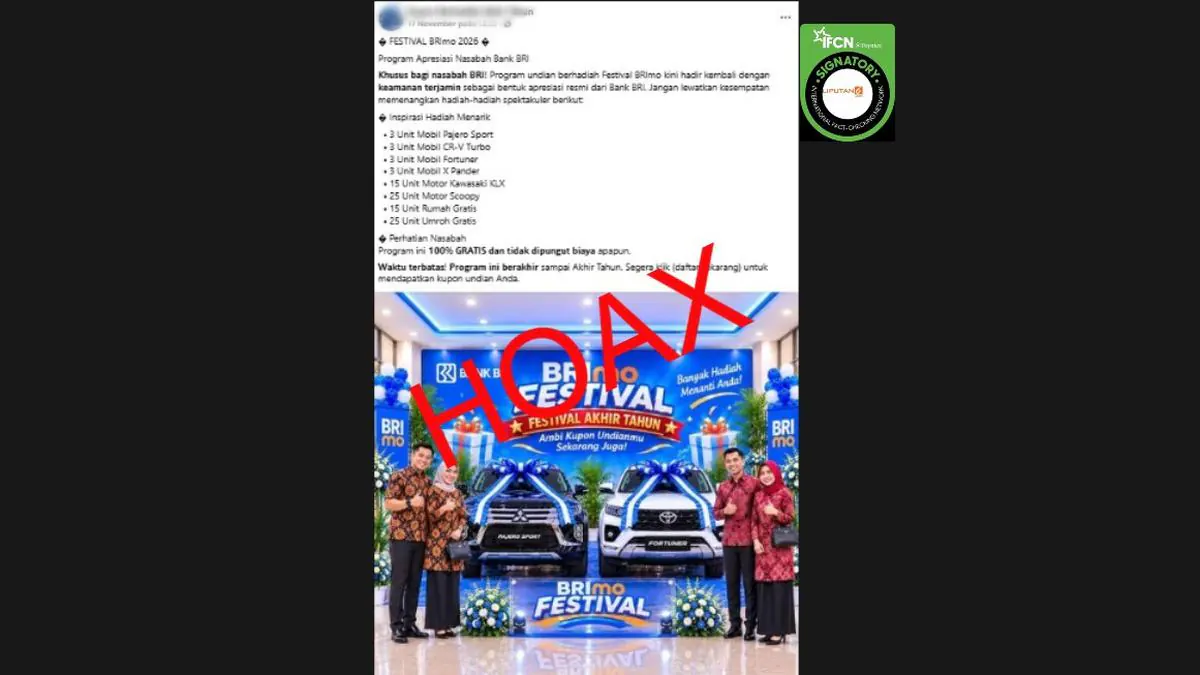
A social media post on Facebook claims that Bank Rakyat Indonesia (BRI) is running a "Festival BRImo 2026" prize draw with giveaways ranging from cars to free houses. However, an investigation by Liputan6.com’s fact-checking desk has confirmed that this information is a hoax and part of a scam aimed at stealing customers' personal data.
The posts, which have been circulating since 17 November 2026, offer spectacular prizes, including three Mitsubishi Pajero Sport units, Honda CR-V Turbos, Toyota Fortunes, X Panders, dozens of motorcycles, free houses, and Umrah packages. The narrative in the messages emphasizes that the program is "100% FREE" and urges users to click a "register now" link before the promotional period ends at the close of the year.
According to the report by Liputan6.com, clicking the link does not direct users to BRI's official website. Instead, it leads to a fake form on Facebook requesting sensitive data such as full names as listed on national identity cards (KTP), WhatsApp numbers, and bank account balance information. Further fact-checking pointed to an official statement from Bank BRI via its Instagram account @bankbri_id. In the post, the bank affirmed that scams via social media using the guise of "BRImo FSTVL" prize draws are becoming increasingly common.
Phishing Tactics and Customer Data Security
Cybercrime targeting the banking sector in Indonesia has become more sophisticated. It no longer relies solely on asking for direct money transfers but focuses on identity theft or phishing. The modus operandi in the "Festival BRImo 2026" hoax exploits consumer psychology, leveraging greed for large prizes and the fear of missing out (FOMO) due to time urgency. By promising prizes worth billions of rupiah for free, perpetrators attempt to lower victims' guard so they willingly hand over personal data.
In the context of digital security, data such as Full Name, National Identity Number (NIK), and Account Numbers are key tools for scammers to breach accounts or even apply for illegal online loans in the victim's name. The request for account balance information in the fake form is likely used to verify if the target has sufficient funds to be stolen, or as part of social engineering to obtain One-Time Passwords (OTPs). OTPs are confidential and should never be shared with anyone, including those claiming to be bank officials.
Cybersecurity experts often refer to this type of attack as social engineering, where humans are the weak point in the security system, rather than the technology itself. Perpetrators create visual displays that mimic the official branding of major corporations like Bank BRI to build false trust. Without adequate digital literacy, ordinary people find it difficult to distinguish between a corporation's official communication channels and fake pages quickly created using simple templates on social media platforms.
Preventive Measures for BRImo Users
For Bank BRI customers and users of the BRImo application, this incident serves as a stern warning to always verify the source of information. Arga M Nugraha, Director of Digital and Information Technology at BRI, has repeatedly reminded the public, as cited in previous reports, never to share usernames, passwords, PINs, or OTP codes with anyone. Official bank programs are typically announced through verified channels such as the website bri.co.id, the BRImo app itself, or official social media accounts with blue checkmarks.
It is important to note that major banks in Indonesia, including BRI, generally do not hold prize draws that require administrative fees or the collection of personal data via external links on social media without strict verification procedures. If you receive similar messages, the safest step is not to click the link, report the hoax-spreading account to the relevant social media platform, and contact BRI's official call center via the phone number listed on your ATM card or their official website for confirmation.
Increasing vigilance against "free" offers that seem too good to be true is the best defense against digital fraud. Do not easily succumb to temptations of luxury cars or free Umrah trips from unclear sources, as the losses resulting from personal data leaks can be far more expensive than the value of the promised prizes.
(Our newsroom has contacted those involved. This story will be updated once we receive an official response.)