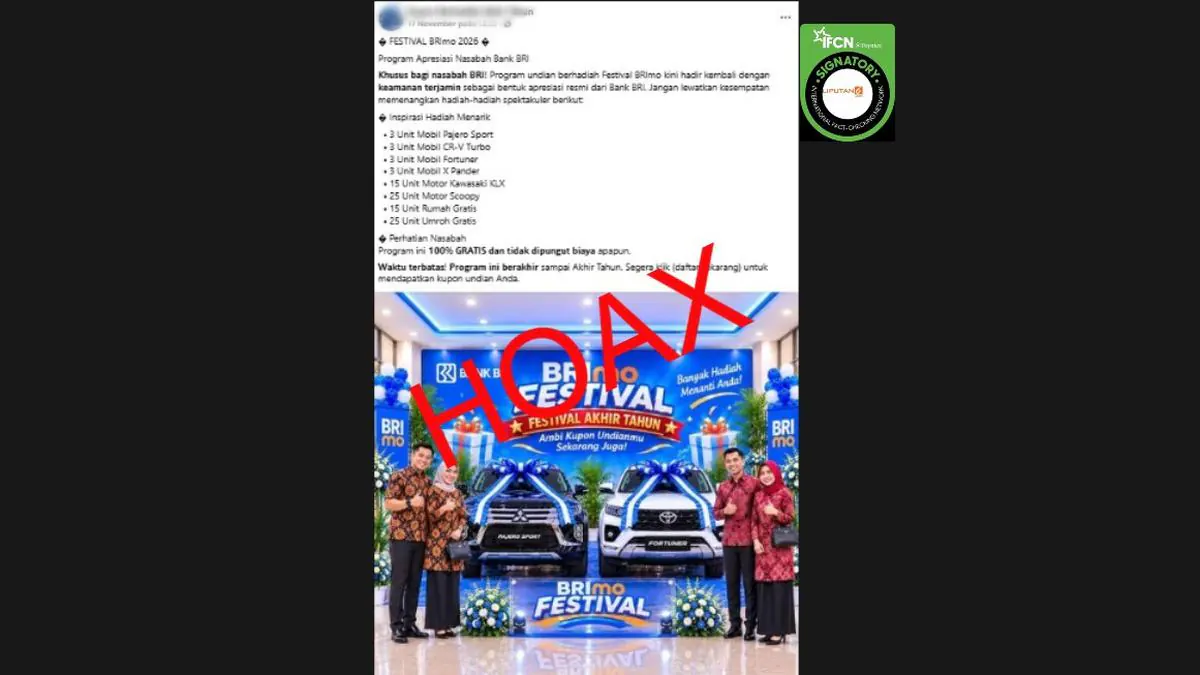
Facebook Links Claiming BRI Prize Draws Are Hoaxes
Links circulating on Facebook promising luxury prizes from Bank Rakyat Indonesia (BRI) have been confirmed as phishing scams designed to steal sensitive personal data.
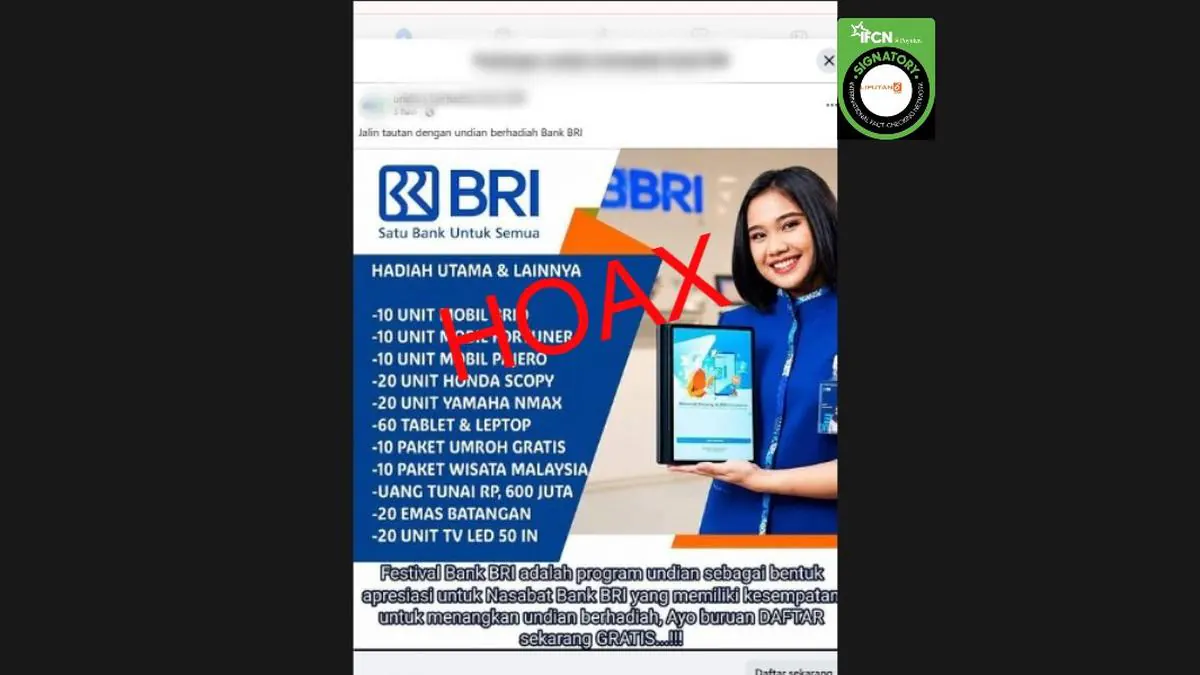
Several links promoting prize draws purportedly organised by Bank Rakyat Indonesia (BRI), one of the country's largest state-owned banks, have circulated widely on Facebook throughout 2026 and have been confirmed as false information.
According to a report by Liputan6, at least three waves of hoax posts were identified in February, September, and November 2026. All followed a similar pattern: offering free luxury prizes such as cars, houses, and Umrah pilgrimage packages, then directing victims to digital forms requesting sensitive data, including names matching their national identity cards (KTP), WhatsApp numbers, and account balance details.
Phishing Attacks Disguised as Bank Promotions
Fraudulent messages or social media links impersonating banks are not a new phenomenon in Indonesia. In cybersecurity terms, this practice is known as phishing, where attackers psychologically manipulate victims into voluntarily handing over confidential information to unauthorised parties. Scammers typically exploit the reputation of major financial institutions with millions of customers to make their messages appear credible.
BRI, which has one of the widest banking networks in Indonesia extending to remote villages, is frequently targeted by cybercriminals. Its massive customer base, comprising both urban and rural populations with varying levels of digital literacy, makes it an attractive target. Scammers understand that some customers may not fully grasp how official banking applications work, making them susceptible to plausible-sounding prize promises.
In the cases circulating on Facebook, scammers employed sophisticated social engineering techniques. They used persuasive phrases such as "exclusive for customers," "100% free," and "limited time" to create a sense of urgency. The promised prizes were deliberately chosen from high-value items popular among the public, ranging from sport utility vehicles (SUVs), trail motorcycles, and precious metals to religious travel packages. The goal was to prompt victims to act quickly without thinking before clicking the provided links.
The links used in these scams generally do not originate from the bank's official domain. As seen in one February 2026 post, the website addresses used random letter combinations completely unrelated to BRI's digital infrastructure. When clicked, these pages display fake forms mimicking the bank's original design to deceive less attentive users.
Real Threats to Indonesian Customers
For Indonesians actively using digital banking services, the circulation of these fake links poses a tangible financial threat. Personal data such as full names as per identification cards and mobile phone numbers are key pieces of information criminals need to hijack accounts or conduct further fraud. If account balance details are also surrendered, scammers can assess potential losses and tailor their next manipulation strategies accordingly.
The central bank and the Financial Services Authority (OJK) have repeatedly reminded the public that legitimate banking institutions never request sensitive information such as passwords, verification codes, or balance details via links distributed on social media. Any official promotional programmes or prize draws are always announced through verified communication channels, including the official website, banking applications, or physical branch offices.
The safest step for customers is to habitually avoid clicking links from unknown sources on platforms like Facebook or WhatsApp. Upon receiving messages containing prize offers purportedly from a bank, immediately verify their authenticity through official customer service or by visiting the nearest branch office. Individual vigilance remains the most effective first line of defence against cybercrime evolving in Indonesia's digital space.