Fact Check: Celebrity-Branded Word Guessing Quizzes Are Scams
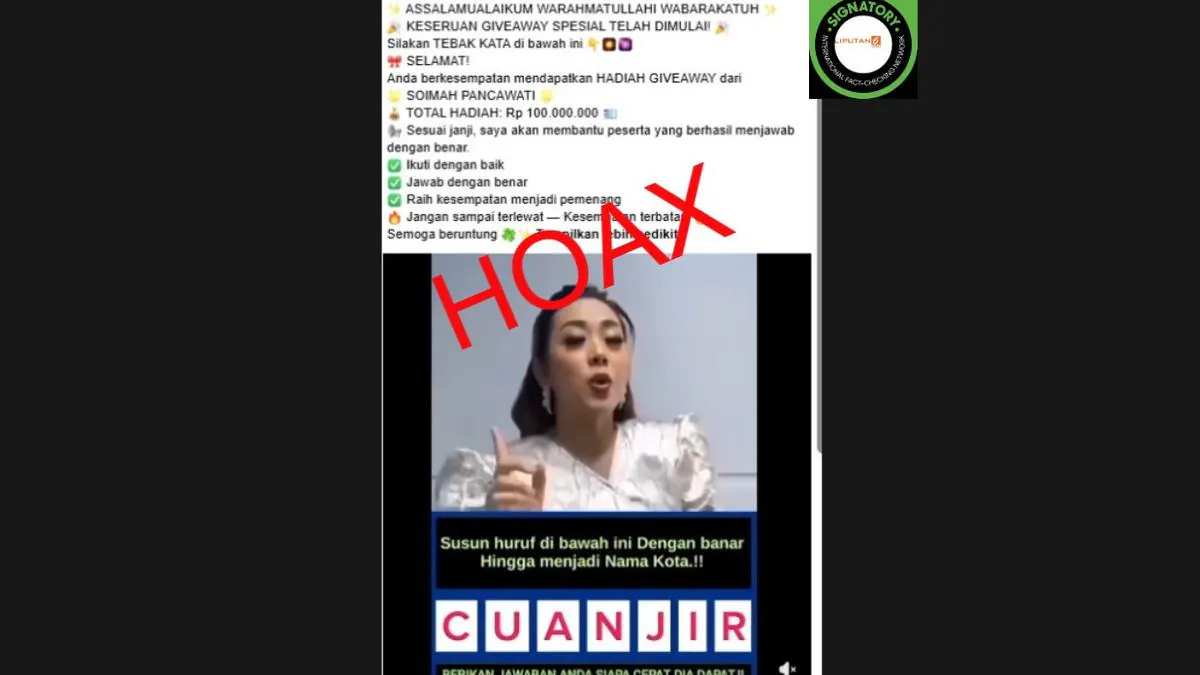
Liputan6.com's fact-checking unit has exposed a series of fake prize quizzes on social media that misuse the names of Indonesian celebrities Soimah, Lesti Kejora, and Nagita Slavina.
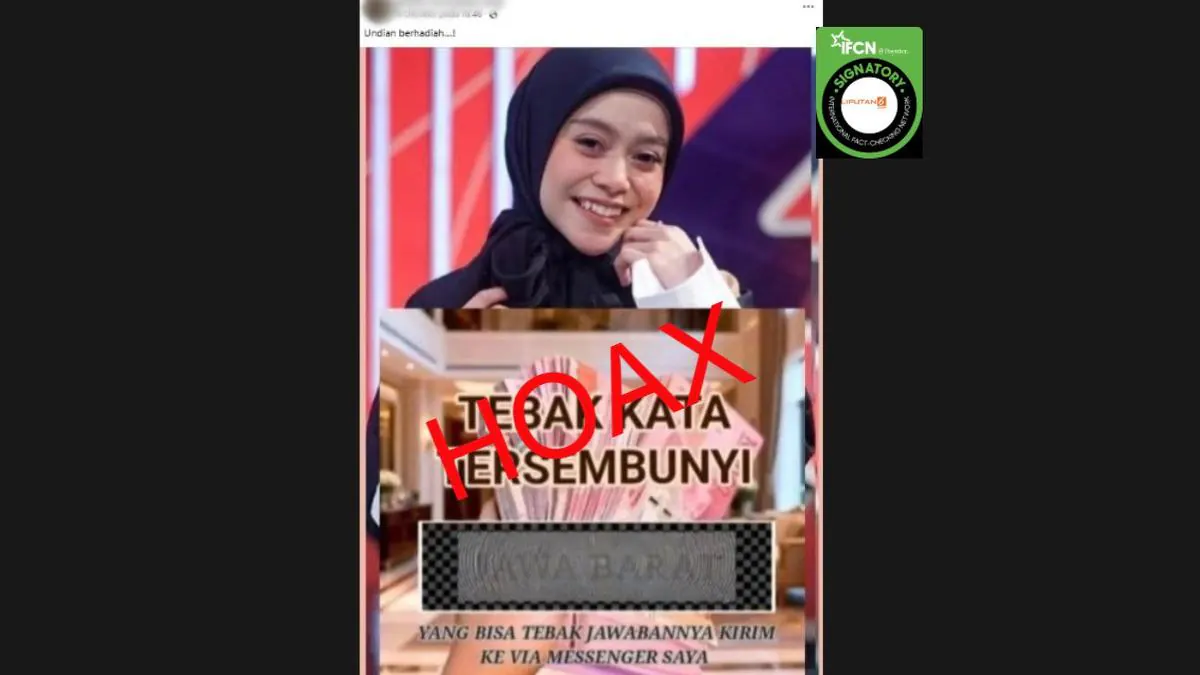
Digital scams disguised as "guess the word" prize quizzes are resurging in Indonesia. This time, high-profile celebrities such as Soimah Pancawati, Lesti Kejora, and Nagita Slavina have had their names misappropriated to facilitate fraud. According to a report by Cek Fakta Liputan6.com (Liputan6.com's Fact Check unit), these false claims spread widely across social media platforms and messaging apps, promising large cash prizes to users who solve simple puzzles.
Modus Operandi: Misusing Celebrity Names
The report details several specific cases verified as hoaxes. First, a video circulated claiming to show Soimah Pancawati announcing a giveaway of up to Rp100 million (approx. US$6,300). In this false narrative, the public was asked to guess city names based on specific letter patterns and send answers via private message. Such posts appeared on Facebook in November 2026.
Second, dangdut singer Lesti Kejora’s name was misused in photo posts titled "Hidden Word Guessing," which circulated in October 2026. The narrative urged users to send answers via Messenger to enter a prize draw. Third, celebrity couple Raffi Ahmad and Nagita Slavina were used as bait in videos offering Rp50 million (approx. US$3,150) in financial aid, conditional on arranging words from random letters. All links within these posts directed users to fake profiles or scam accounts with no official connection to the artists.
Social Engineering Mechanisms
This phenomenon is not merely the spread of misinformation but a form of cyberattack leveraging human psychology, known as social engineering. Perpetrators use the names of trusted public figures to build false credibility. When individuals see their favorite celebrities promising prizes, their vigilance drops significantly. They tend to believe the offers are genuine because they feel familiar with the persona behind the advertisement.
The "word guessing" technique is chosen to create an illusion of active participation. Victims feel they have already made a small effort to answer the question, making them reluctant to abandon the process before seeing the result. This is a classic trap: after the victim sends a message, the perpetrator requests sensitive personal data, such as bank account numbers, national ID cards (KTP), or one-time passwords (OTP), under the guise of verifying prize delivery. Alternatively, victims may be asked to pay administrative fees upfront, a hallmark of advance-fee fraud.
It is crucial to understand that official programs from celebrities or major companies always have verified communication channels. They never ask followers to contact unverified personal accounts or send confidential data via private chat. While social media platforms have strict policies against deceptive content, the sheer volume of uploads often means automated detection lags behind the speed of dissemination.
Impact on Indonesian Internet Users
For readers in Indonesia, particularly the elderly or those less tech-savvy, this type of hoax poses a real financial risk. Many cases involve victims losing their life savings due to the lure of multi-million rupiah prizes. Beyond material loss, psychological impacts such as shame and trauma from being scammed are common, though rarely reported publicly.
On a microeconomic level, this undermines public trust in digital transactions. If society is constantly bombarded by quiz-based scams, people may become overly skeptical of legitimate promotions from official brands, ultimately hindering the growth of a healthy e-commerce and digital marketing ecosystem. Therefore, digital literacy serves as the primary defense. The public must be taught to cross-check information through the official channels of the relevant celebrities—typically available in their Instagram bios or management websites—before sharing any data.
Prevention and Verification Steps
As of this writing, there has been no official statement from the management teams of Soimah, Lesti Kejora, or Nagita Slavina regarding specific legal actions against the creators of these latest hoax contents. However, past handling patterns suggest that artists' legal teams usually cooperate with social media platforms to remove content violating copyright and reputation rights.
Moving forward, internet users are advised to report every suspicious post using the "Report" feature on Facebook, Instagram, or WhatsApp. Reporting fake accounts helps platform algorithms detect and block scam networks more quickly. Never click on short links of unclear origin, and remember the basic principle of cybersecurity: if something sounds too good to be true, it probably is.