Fact Check: Fake Giveaway Videos and Aid Promises Impersonate Indonesian Celebrity Soimah Pancawati
Indonesian fact-checkers debunk viral videos claiming singer and presenter Soimah Pancawati is offering cash giveaways and financial aid, warning of social engineering scams.
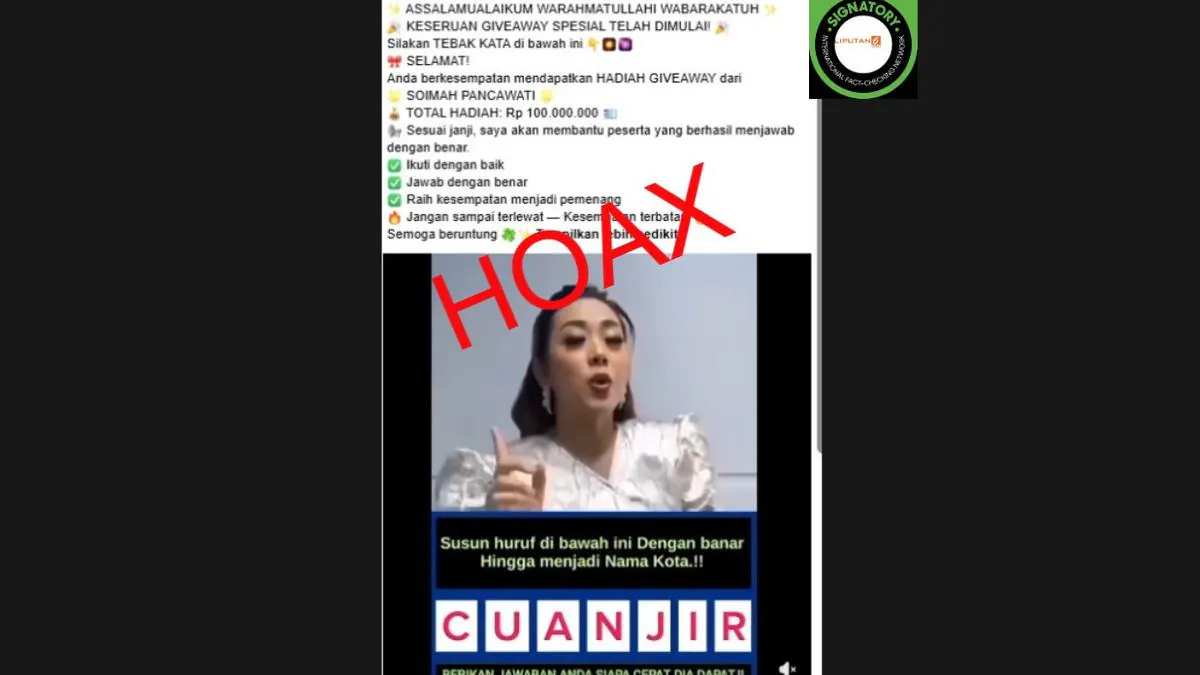
Indonesian singer and television presenter Soimah Pancawati has once again become the target of misinformation on social media. According to a report by Liputan6, scammers are creating fake video content that appears to originate from Soimah, announcing large prize giveaways or financial aid packages contingent on specific actions.
Scams Disguised as Prize Giveaways
The core finding of this investigation is that these fraudulent narratives have never been confirmed by Soimah or her official management team. The circulating content typically takes the form of short video clips or text posts containing links to messaging applications such as Messenger, directing users to contact scam accounts.
In one case traced in November 2026, a Facebook account claimed that Soimah was hosting a "word guessing giveaway" with total prizes reaching Rp100 million (approximately US$6,300). Participants were asked to answer questions involving city name letter arrangements and then submit their answers via private message. A similar pattern was found in posts circulating since September 2026 and October 2025, where perpetrators promised cash aid ranging from Rp20 million to Rp100 million for those who registered or guessed words correctly.
Verification by Liputan6's Fact Check unit concluded that all such claims are false. There is no valid evidence that Soimah Pancawati is involved in any random distribution of funds or prizes through social media platforms using such mechanisms. The links provided in these posts serve as entry points for further fraudulent activities.
Social Engineering Targeting Celebrities
This incident is not merely a local issue concerning an entertainer but reflects a global trend in cybercrime that exploits the popularity of public figures. In digital security, this technique is known as social engineering. Perpetrators leverage the reputation and public trust associated with celebrities to lower victims' guard. When names of famous figures like Soimah are used, potential interactions—clicks, comments, and shares—increase dramatically because audiences feel an emotional or professional connection to their idols.
Historically, Indonesia has strict regulations regarding product and service promotions by influencers. The Consumer Protection Law and advertising ethics guidelines mandate transparency in all commercial transactions or grants. However, scammers often ignore these legal aspects by creating convincing fictional scenarios through simple audio-visual manipulation. The increasing accessibility of deepfake technology and voice editing tools allows for the creation of fake content that appears authentic to the untrained eye, although in Soimah's case, indications of forgery remain visible due to poor grammar and non-standard message formats.
It is crucial to understand that top-tier celebrities usually have management teams handling their official communications. Any major aid program or prize contest would be announced through verified channels (blue checkmarks) or official websites, not through sudden personal accounts promising instant wealth. The absence of an official digital footprint from trusted sources is a strong indicator that the information is a hoax.
Financial Risks for Digital Communities
For readers in Indonesia, the direct impact of this type of hoax includes the risk of financial loss and personal data theft. Victims lured by promises of Rp100 million prizes or Rp20 million aid are often asked to pay administrative fees, provide bank account numbers, or even share One-Time Password (OTP) codes under the guise of verifying prize recipients. Once this sensitive data falls into the hands of scammers, bank balances can be drained within minutes.
The high level of social media activity among Indonesians, particularly on Facebook and WhatsApp, facilitates the rapid spread of such hoaxes. Platform algorithms tend to prioritize content that triggers emotional reactions, including the joy of receiving unexpected windfalls. Therefore, digital literacy serves as the primary defense. Internet users must apply the principle of "filter before sharing," verifying the truth of information from official sources before forwarding messages to others.
Beyond material losses, the psychological impact is real. False hopes built through viral videos can cause deep disappointment, especially among vulnerable community groups seeking economic assistance. This underscores the importance of social media platforms and law enforcement taking more aggressive action against accounts spreading hoaxes that impersonate public figures.
Prevention Measures and Further Verification
Moving forward, the public is urged to remain vigilant against any offers of prizes or aid coming from unofficial accounts. The safest step is to cross-check information through reliable news channels or the celebrity's official accounts. If there is any doubt, avoid clicking foreign links and never provide personal data.
As of now, there has been no recent official statement from Soimah Pancawati's side regarding specific legal actions against the hoax distributors. However, previous handling of similar cases has involved cooperation with cyber police to trace the identities of those creating fake content. The public is advised to follow updates only from sources whose credibility has been verified.