Tasya Farasya Takes Luxury Home Dispute to Legal Channels
Indonesian beauty influencer Tasya Farasya confirms that the controversy surrounding her luxury home will proceed through the legal system, with lawyers citing collected evidence of alleged criminal acts.
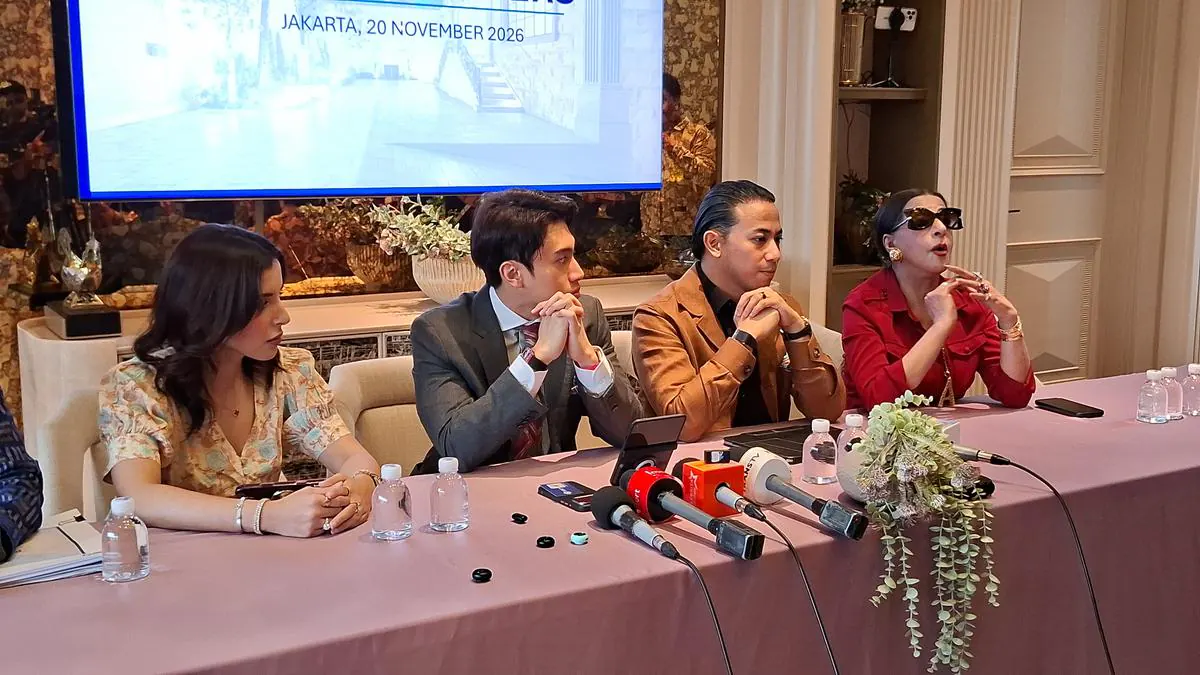
Beauty vlogger Tasya Farasya has confirmed that the controversy surrounding her luxury home will not end with social media clarifications and will instead be pursued through legal channels. Speaking at a press conference in South Jakarta on Friday (20 November), she was accompanied by her legal representatives, Sangun Ragahdo and Riphat Senikentara, as reported by Liputan6.
The legal team stated that there are multiple allegations of criminal acts related to the housing issue. However, specific details have not yet been disclosed, although evidence for some of the claims is reportedly already gathered. The filing of the report was delayed because Tasya was considering the potential impact on her children.
According to her lawyers, this is not the first time Tasya has faced such issues. Last year, she also dealt with allegations of criminal acts involving her company, MOP, which resulted in losses amounting to tens of billions of rupiah (approximately several million US dollars). At that time, she chose to remain patient. Currently, there has been no apology or offer of compensation from the contractor side. "There came a moment where it felt like 'enough is enough' to me," Tasya said.
From Beauty Content to the Courtroom
Tasya Farasya is recognized as one of Indonesia's most popular beauty vloggers. She gained widespread fame in the mid-2010s through her YouTube channel, featuring product reviews, makeup tutorials, and daily life videos. Her career subsequently expanded into business and corporate management.
The digital beauty industry in Indonesia has grown rapidly over the past decade. Many beauty vloggers do more than appear on camera; they become entrepreneurs by launching their own cosmetic brands, collaborating with global labels, and building businesses beyond content creation. Consequently, their commercial affairs often intersect with partners, contractors, and management entities.
When business and family disputes remain unresolved, many public figures choose the legal route. Filing a police report is an initial step, not a verdict. Police examine evidence and witnesses before determining whether a crime has occurred. A person can only be designated as a suspect if at least two pieces of evidence meet the legal threshold, and this status remains subject to change until a final court decision is reached.
This is where the presumption of innocence applies. Parties who are reported cannot be deemed guilty before a court rules on the matter. The "alleged criminal acts" mentioned by a complainant are unilateral claims that must still be proven during the investigation process.
Housing disputes typically originate from civil relationships, such as construction work agreements or negligence in execution. However, if elements of fraud, embezzlement, or forgery are found, the case can enter the criminal domain. The key distinction lies in the presence of unlawful elements and the resulting damages.
In criminal cases, the complainant submits preliminary evidence, after which investigators assess whether the event meets the criteria of the suspected articles. This process can take months and often ends in settlement if both parties agree midway.
Lessons for the Public During Disputes
For readers in Indonesia, this case serves as a reminder that disputes with contractors or business partners should be anticipated from the outset. Written agreements, transfer proofs, photos of work progress, and communication documentation are vital tools if the issue escalates to legal action. Without sufficient evidence, criminal reports struggle to proceed.
From the perspective of the content industry, Tasya's move is notable given her status as a public figure with a large following. A beauty vlogger's decision to bring personal issues into the public eye can affect fan trust and the image of the brands she represents. In this instance, Tasya chose to speak through her lawyers rather than relying solely on social media clarifications.
As a content creator, Tasya now faces challenges outside the digital realm. Her followers await further news, while parts of the public may judge her legal choices. This case illustrates that the personal and business lives of a content creator cannot be entirely separated.
Looking ahead, attention will focus on the development of the report and whether investigators find sufficient evidence. The public should wait for the outcome of the legal process without judging any party. As long as there is no final court decision with binding legal force, all involved parties must be treated as innocent.
(Our newsroom has contacted those involved. This story will be updated once we receive an official response.)